


• English
  • हिन्दी (Hindi)
  • বাংলা (Bengali)
  • தமிழ் (Tamil)
  • తెలుగు (Telugu)
  • मराठी (Marathi)
  • ગુજરાતી (Gujarati)
  • ಕನ್ನಡ (Kannada)
  • മലയാളം (Malayalam)
  • ਪੰਜਾਬੀ (Punjabi)
  • ଓଡ଼ିଆ (Odia)
  • اردو (Urdu)
  • অসমীয়া (Assamese)
  • भोजपुरी (Bhojpuri)
  • मैथिली (Maithili)
  • डोगरी (Dogri)
  • कोंकणी (Konkani)
  • संस्कृत (Sanskrit)
  • سنڌي (Sindhi)
  • नेपाली (Nepali)
  • සිංහල (Sinhala)
  • Español (Spanish)
  • Français (French)
  • Deutsch (German)
  • Italiano (Italian)
  • Português (Portuguese)
  • Русский (Russian)
  • 日本語 (Japanese)
  • 한국어 (Korean)
  • 中文 简体 (Chinese Simplified)
  • 中文 繁體 (Chinese Traditional)
  • العربية (Arabic)
  • עברית (Hebrew)
  • فارسی (Persian)
  • Türkçe (Turkish)
  • Nederlands (Dutch)
  • Svenska (Swedish)
  • Norsk (Norwegian)
  • Dansk (Danish)
  • Suomi (Finnish)
  • Polski (Polish)
  • Čeština (Czech)
  • Slovenčina (Slovak)
  • Slovenščina (Slovenian)
  • Magyar (Hungarian)
  • Română (Romanian)
  • Български (Bulgarian)
  • Українська (Ukrainian)
  • Ελληνικά (Greek)
  • Hrvatski (Croatian)
  • Српски (Serbian)
  • ไทย (Thai)
  • Tiếng Việt (Vietnamese)
  • Bahasa Indonesia (Indonesian)
  • Bahasa Melayu (Malay)
  • Filipino
  • မြန်မာ (Burmese)
  • ខ្មែរ (Khmer)
  • ລາວ (Lao)
  • Монгол (Mongolian)
  • Қазақ (Kazakh)
  • Oʻzbek (Uzbek)
  • Кыргызча (Kyrgyz)
  • Тоҷикӣ (Tajik)
  • Türkmen (Turkmen)
  • Azərbaycan (Azerbaijani)
  • Հայերեն (Armenian)
  • ქართული (Georgian)
  • Беларуская (Belarusian)
  • Lietuvių (Lithuanian)
  • Latviešu (Latvian)
  • Eesti (Estonian)
  • Íslenska (Icelandic)
  • Gaeilge (Irish)
  • Gàidhlig (Scots Gaelic)
  • Cymraeg (Welsh)
  • Euskara (Basque)
  • Català (Catalan)
  • Galego (Galician)
  • Malti (Maltese)
  • Македонски (Macedonian)
  • Bosanski (Bosnian)
  • Shqip (Albanian)
  • Afrikaans
  • Kiswahili (Swahili)
  • አማርኛ (Amharic)
  • Hausa
  • Igbo
  • Yorùbá (Yoruba)
  • isiZulu (Zulu)
  • isiXhosa (Xhosa)
  • Sesotho
  • Sepedi
  • Shona
  • Soomaali (Somali)
  • Kinyarwanda
  • Chichewa
  • ትግርኛ (Tigrinya)
  • Oromoo (Oromo)
  • Xitsonga (Tsonga)
  • Luganda
  • Akan (Twi)
  • Lëtzebuergesch (Luxembourgish)
  • Frysk (Frisian)
  • Corsu (Corsican)
  • Esperanto
  • Latina (Latin)
  • Basa Jawa (Javanese)
  • Basa Sunda (Sundanese)
  • Cebuano
  • ʻŌlelo Hawaiʻi (Hawaiian)
  • Gagana Samoa (Samoan)
  • Te Reo Māori (Maori)
  • Kreyòl Ayisyen (Haitian Creole)
  • Runasimi (Quechua)
  • Aymar Aru (Aymara)
  • Avañeʼẽ (Guarani)
  • Kurdî (Kurdish)
  • کوردیی ناوەندی (Kurdish Sorani)
  • پښتو (Pashto)
  • ئۇيغۇرچە (Uyghur)
  • ދިވެހި (Dhivehi)
  • ייִדיש (Yiddish)
  • Krio
  • Mizo
  • Manipuri (Meiteilon)
  • Eʋegbe (Ewe)
  • Lingála
  • Bamanankan (Bambara)
  • Hmoob (Hmong)
  • Ilokano

Rohit Sharma Conferred Padma Shri 2026: A Proud Milestone in Indian Cricket History

Former Indian cricket captain Rohit Sharma receives the Padma Shri 2026 for his outstanding contribution to Indian cricket, leadership, and record-breaking achievements.

Gagan Saxena

Writer & Blogger

Gagan Saxena

Writer & Blogger

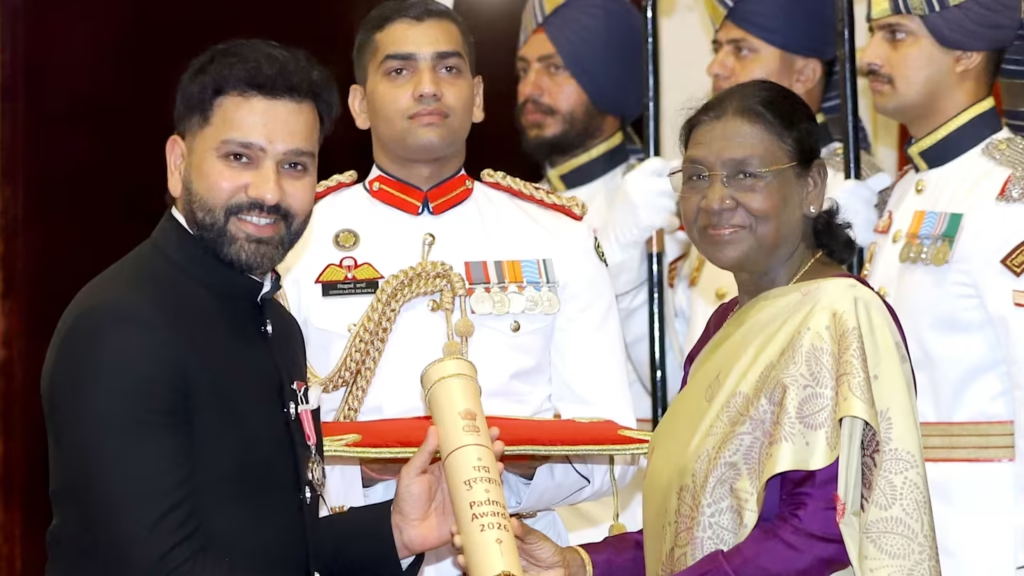
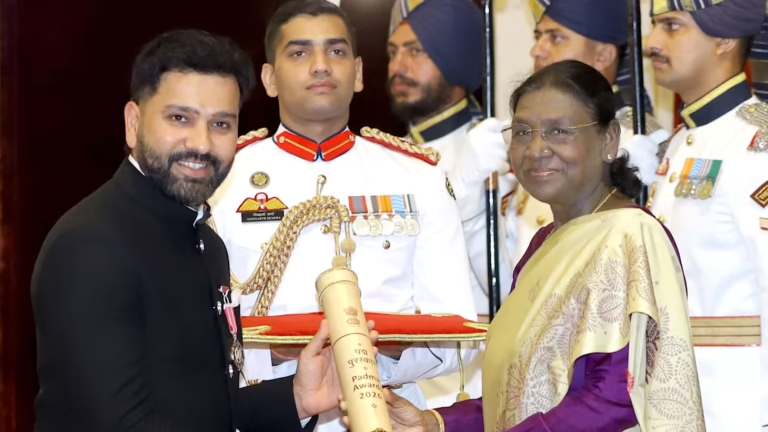
In a proud moment for cricket fans across India, former Indian captain Rohit Sharma has been conferred with the prestigious Padma Shri, India’s fourth-highest civilian award. The honor was presented by Droupadi Murmu during the Civil Investiture Ceremony at Rashtrapati Bhavan on June 23, 2026.

The award recognizes Rohit Sharma’s remarkable contribution to Indian cricket, his inspiring leadership, and his extraordinary achievements on the international stage. Over nearly two decades, Rohit has become one of the most respected and successful cricketers in the world, making this recognition a fitting tribute to his incredible journey.

rohit-sharma-padma-shri-2026

A Special Date That Made the Moment Even More Memorable

For Rohit Sharma, June 23 carries special significance.

Nineteen years earlier, on June 23, 2007, he made his international debut for India in a One Day International match against Ireland. Receiving one of India’s highest civilian honors on the same date in 2026 created a memorable full-circle moment in his career.

Sharing his emotions on social media, Rohit reflected on the coincidence and expressed gratitude for the journey that began with wearing the Indian jersey and has now led to one of the country’s highest recognitions.

The moment became even more heartwarming as Rohit was accompanied by his wife, Ritika Sajdeh, during the ceremony.

Rohit Sharma’s Leadership Changed Indian Cricket

While Rohit Sharma’s batting records are legendary, his leadership has played an equally important role in shaping modern Indian cricket.

Under his captaincy, India achieved major success in global tournaments and re-established itself as a dominant force in world cricket.

Major ICC Achievements as Captain

ICC Men’s T20 World Cup 2024

Rohit Sharma led India to a historic unbeaten title-winning campaign, ending a long wait for an ICC trophy and bringing joy to millions of cricket fans worldwide.

ICC Champions Trophy 2025

India continued its dominance under Rohit’s leadership by lifting the Champions Trophy and showcasing exceptional consistency across the tournament.

His calm approach, tactical awareness, and ability to back young players earned praise from former cricketers and experts around the globe.

The Numbers Behind a Legendary Career

Rohit Sharma’s statistics reflect his status as one of the greatest batsmen of the modern era.

ODI Career

  • Matches: 285
  • Runs: 11,720+
  • Highest Score: 264
  • Three Double Centuries
  • Multiple ICC Tournament Records

Test Career

  • Matches: 67
  • Runs: 4,301+
  • Centuries: 12
  • Half-Centuries: 18

Rohit retired from Test cricket in 2025 after building a successful red-ball career.

T20 International Career

  • Matches: 159
  • Runs: 4,231+
  • First Men’s Cricketer to Play 150+ T20Is
  • Multiple World Cup Appearances

He retired from T20 International cricket following India’s T20 World Cup triumph in 2024.

Currently, Rohit Sharma continues to represent India in the ODI format.

Why Rohit Sharma Deserves the Padma Shri

The Padma Shri is awarded to individuals who have made distinguished contributions in their respective fields.

Rohit Sharma’s impact extends far beyond statistics. He has inspired an entire generation of young cricketers through his discipline, humility, and dedication to the sport.

His contributions include:

  • Transforming India’s white-ball cricket culture.
  • Leading India to major ICC trophies.
  • Setting world records in ODI cricket.
  • Inspiring millions of aspiring cricketers.
  • Promoting Indian cricket on the global stage.

The award acknowledges years of hard work, perseverance, and excellence.

Joining an Elite Group of Indian Cricket Legends

With this recognition, Rohit Sharma joins an exclusive list of Indian cricketers who have received the Padma Shri.

He now stands alongside legendary names such as:

  • Sachin Tendulkar
  • MS Dhoni
  • Virat Kohli

This honor further cements his place among the greatest players in Indian cricket history.

Other Sportspersons Honored in Padma Awards 2026

The 2026 Padma Awards also recognized several outstanding athletes for their contributions to Indian sports.

Among the recipients were:

  • Harmanpreet Kaur – Padma Shri
  • Savita Punia – Padma Shri
  • Vijay Amritraj – Padma Bhushan

Their achievements continue to inspire future generations of Indian athletes.

Conclusion

The Padma Shri 2026 is a well-deserved recognition of Rohit Sharma’s remarkable contribution to Indian cricket. From his debut in 2007 to becoming one of the most successful captains and batsmen in cricket history, Rohit’s journey is a story of talent, determination, and excellence.

As India celebrates this achievement, the honor serves as a reminder of the lasting impact Rohit Sharma has had on the game. His records, leadership, and dedication will continue to inspire cricket lovers for generations to come.

Previous Post

Leave a Reply

Your email address will not be published. Required fields are marked *

Previous Post

Subscribe to Our Newsletter

    © 2026 FindBrief. All Rights Reserved.

    Which language are you reading?

    Apni pasandida bhasha chunein

    • English
    • हिन्दी (Hindi)
    • বাংলা (Bengali)
    • தமிழ் (Tamil)
    • తెలుగు (Telugu)
    • मराठी (Marathi)
    • ગુજરાતી (Gujarati)
    • ಕನ್ನಡ (Kannada)
    • മലയാളം (Malayalam)
    • ਪੰਜਾਬੀ (Punjabi)
    • ଓଡ଼ିଆ (Odia)
    • اردو (Urdu)
    • অসমীয়া (Assamese)
    • भोजपुरी (Bhojpuri)
    • मैथिली (Maithili)
    • डोगरी (Dogri)
    • कोंकणी (Konkani)
    • संस्कृत (Sanskrit)
    • سنڌي (Sindhi)
    • नेपाली (Nepali)
    • සිංහල (Sinhala)
    • Español (Spanish)
    • Français (French)
    • Deutsch (German)
    • Italiano (Italian)
    • Português (Portuguese)
    • Русский (Russian)
    • 日本語 (Japanese)
    • 한국어 (Korean)
    • 中文 简体 (Chinese Simplified)
    • 中文 繁體 (Chinese Traditional)
    • العربية (Arabic)
    • עברית (Hebrew)
    • فارسی (Persian)
    • Türkçe (Turkish)
    • Nederlands (Dutch)
    • Svenska (Swedish)
    • Norsk (Norwegian)
    • Dansk (Danish)
    • Suomi (Finnish)
    • Polski (Polish)
    • Čeština (Czech)
    • Slovenčina (Slovak)
    • Slovenščina (Slovenian)
    • Magyar (Hungarian)
    • Română (Romanian)
    • Български (Bulgarian)
    • Українська (Ukrainian)
    • Ελληνικά (Greek)
    • Hrvatski (Croatian)
    • Српски (Serbian)
    • ไทย (Thai)
    • Tiếng Việt (Vietnamese)
    • Bahasa Indonesia (Indonesian)
    • Bahasa Melayu (Malay)
    • Filipino
    • မြန်မာ (Burmese)
    • ខ្មែរ (Khmer)
    • ລາວ (Lao)
    • Монгол (Mongolian)
    • Қазақ (Kazakh)
    • Oʻzbek (Uzbek)
    • Кыргызча (Kyrgyz)
    • Тоҷикӣ (Tajik)
    • Türkmen (Turkmen)
    • Azərbaycan (Azerbaijani)
    • Հայերեն (Armenian)
    • ქართული (Georgian)
    • Беларуская (Belarusian)
    • Lietuvių (Lithuanian)
    • Latviešu (Latvian)
    • Eesti (Estonian)
    • Íslenska (Icelandic)
    • Gaeilge (Irish)
    • Gàidhlig (Scots Gaelic)
    • Cymraeg (Welsh)
    • Euskara (Basque)
    • Català (Catalan)
    • Galego (Galician)
    • Malti (Maltese)
    • Македонски (Macedonian)
    • Bosanski (Bosnian)
    • Shqip (Albanian)
    • Afrikaans
    • Kiswahili (Swahili)
    • አማርኛ (Amharic)
    • Hausa
    • Igbo
    • Yorùbá (Yoruba)
    • isiZulu (Zulu)
    • isiXhosa (Xhosa)
    • Sesotho
    • Sepedi
    • Shona
    • Soomaali (Somali)
    • Kinyarwanda
    • Chichewa
    • ትግርኛ (Tigrinya)
    • Oromoo (Oromo)
    • Xitsonga (Tsonga)
    • Luganda
    • Akan (Twi)
    • Lëtzebuergesch (Luxembourgish)
    • Frysk (Frisian)
    • Corsu (Corsican)
    • Esperanto
    • Latina (Latin)
    • Basa Jawa (Javanese)
    • Basa Sunda (Sundanese)
    • Cebuano
    • ʻŌlelo Hawaiʻi (Hawaiian)
    • Gagana Samoa (Samoan)
    • Te Reo Māori (Maori)
    • Kreyòl Ayisyen (Haitian Creole)
    • Runasimi (Quechua)
    • Aymar Aru (Aymara)
    • Avañeʼẽ (Guarani)
    • Kurdî (Kurdish)
    • کوردیی ناوەندی (Kurdish Sorani)
    • پښتو (Pashto)
    • ئۇيغۇرچە (Uyghur)
    • ދިވެހި (Dhivehi)
    • ייִדיש (Yiddish)
    • Krio
    • Mizo
    • Manipuri (Meiteilon)
    • Eʋegbe (Ewe)
    • Lingála
    • Bamanankan (Bambara)
    • Hmoob (Hmong)
    • Ilokano
    Scroll to Top